
THE QUBIRTU NAME AND EMBLEM
The quantum fortress
Qubirtu brings the quantum era together with the ancient image of a fortress. It is the name of a network we are designing for protected digital settlement.

ORIGIN OF THE NAME
Where Qubirtu comes from
Akkadian is one of the oldest Semitic languages. It was spoken in ancient Mesopotamia, including in the Akkadian Empire, Babylonia and Assyria. It was written in cuneiform, a script borrowed from the Sumerians.
In Akkadian, birtu means a fort or fortress and, in some contexts, fortifications. The ORACC cuneiform corpus records spellings including bir-tu and bi-ir-tu.
We took Qu from quantum and combined it with birtu to create Qubirtu, our “quantum fortress.” It is a modern project name, not an ancient place name or a word found on a tablet.
ORACC Akkadian glossaryThe quantum era
A fort or fortress
THE EMBLEM
A fortress in overlapping lines
The interlocking outlines suggest a fortification seen in plan. We read them as distinct layers of protection: verifying signatures, enforcing native transaction rules and managing keys. The emblem is neither a cuneiform sign nor a diagram of an archaeological site.
FROM THE METROPOLITAN MUSEUM OF ART
Clay, writing and a citadel
Ancient Mesopotamians wrote in cuneiform, pressing wedge-shaped signs into soft clay. Tablets preserved correspondence, agreements and economic records. The two objects below show that world, not the origin of our emblem.
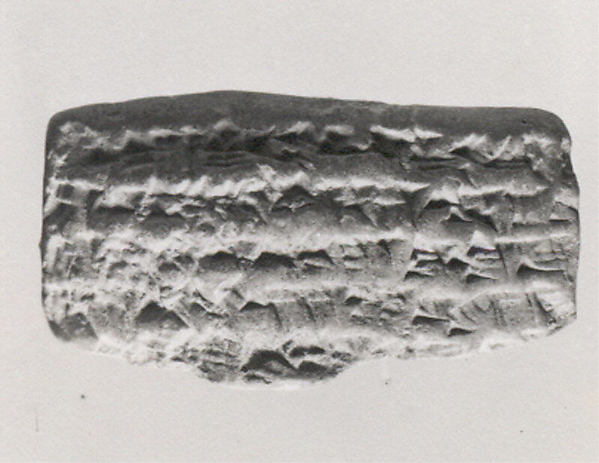
A clay tablet
A promissory note for barley and wheat from the Babylonian Esagilaya archive, ca. 604–562 BCE. This is an example of a recorded obligation, not a tablet inscribed with the name Qubirtu.
The Metropolitan Museum of Art · Public domainMuseum catalogue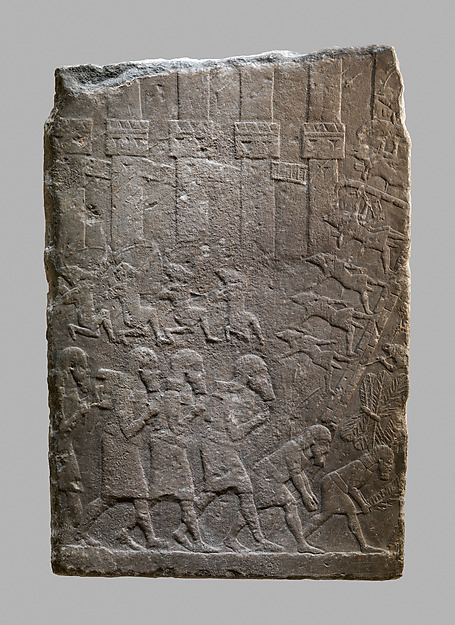
A citadel on a relief
A Neo-Assyrian relief, ca. 704–681 BCE. The upper part shows the walls of a citadel under siege. It does not depict a fortress named Qubirtu.
The Metropolitan Museum of Art · Public domainMuseum catalogueWHAT IT MEANS FOR THE NETWORK
What we protect
Fortress refers to a defined boundary: critical native Qubirtu operations are designed to require post-quantum verification. That is an architectural principle, not a promise about external chains, bridges, banks or card networks.